Astrology
 Ayurveda
 Palmistry
 Vastu
Vastu
Views: 564
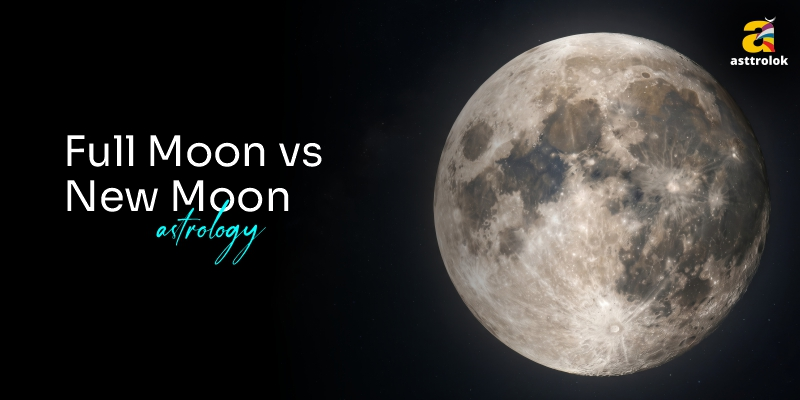
The Full Moon symbolises completion, emotional clarity, gratitude and fulfilment, while the New Moon represents fresh beginnings, intention-setting and new opportunities. In Vedic astrology, these lunar phases are known as Purnima and Amavasya, and each carries a unique spiritual and astrological significance that influences emotions, energy and personal growth.
Have you ever noticed feeling more emotional around the Full Moon or unusually motivated when a New Moon begins? Many people experience subtle changes in their mood, thoughts and energy without realising that the Moon's changing phases may be influencing them.
In Vedic astrology, the Moon, known as Chandra Graha, governs the mind, emotions, intuition and inner peace. As it moves through its monthly lunar cycle, its energy changes, creating different opportunities for reflection, healing, manifestation and new beginnings.
Understanding the difference between a Full Moon and a New Moon can help you make better decisions, strengthen your spiritual practice and align your actions with nature's rhythm. Whether you're planning important life events, beginning a new project or seeking emotional balance, recognising these powerful Moon phases allows you to work with cosmic energy rather than against it.
Let's explore what each Moon phase truly represents and why they continue to hold such an important place in both astrology and everyday life.
Read: 7 Powerful Reasons Guru Purnima Is Spiritually Important
What Is the Difference Between a Full Moon and a New Moon?
Although both phases are part of the same lunar cycle, their astrological meanings are completely different.
A New Moon occurs when the Moon is positioned between the Earth and the Sun, making it almost invisible from our perspective. Astrologically, it represents new beginnings, fresh ideas, goal setting and personal growth.
A Full Moon, on the other hand, appears when the Earth is between the Sun and the Moon, allowing the Moon to shine at its brightest. This phase symbolises completion, emotional awareness, abundance and the results of previous efforts.
Full Moon vs New Moon Comparison
While one phase encourages you to celebrate achievements and let go of what no longer serves you, the other invites you to create a fresh vision for the future.
Full Moon Meaning in Astrology
The Full Moon meaning in astrology goes far beyond its beautiful appearance in the night sky. It represents illumination, clarity and the peak of emotional energy. During this phase, situations that have been developing over the previous weeks often reach a conclusion, making it easier to gain insight into relationships, career decisions and personal goals.
In Full Moon astrology, emotions tend to become stronger because the Moon governs the mind and feelings. Many people notice heightened intuition, vivid dreams or a greater desire for self-reflection. This is why Full Moon meditation and gratitude practices are commonly recommended during this time.
Spiritually, the Full Moon encourages you to:
Reflect on your achievements.
Release negative thoughts and emotional burdens.
Express gratitude for your progress.
Strengthen your connection with your inner self.
Practise forgiveness and emotional healing.
Rather than starting something entirely new, the Full Moon reminds us to appreciate how far we have come before taking the next step.
India’s most trusted Vedic astrology program

सम्पूर्ण जानकारी प्राप्त करें |
New Moon Meaning in Astrology
The New Moon meaning symbolises hope, possibilities and new beginnings. As the lunar cycle starts again, it creates the ideal opportunity to plant the seeds of future success.
According to New Moon astrology, this is the best time to define your intentions, start learning a new skill, begin a project or focus on personal transformation. Because the Moon is not visible, the energy turns inward, encouraging quiet reflection and thoughtful planning.
Many astrologers recommend using this phase for manifestation because it supports fresh opportunities and long-term growth.
The New Moon spiritual meaning is associated with:
Setting meaningful intentions.
Building positive habits.
Beginning spiritual practices.
Starting new educational or career goals.
Visualising the future you wish to create.
Instead of looking at past experiences, the New Moon encourages you to focus on the opportunities waiting ahead.
Full Moon vs New Moon in Vedic Astrology (Purnima vs Amavasya)
In Vedic astrology, the Moon is one of the most influential celestial bodies because it governs the human mind, emotions and mental stability. The two major lunar phases, Purnima (Full Moon) and Amavasya (New Moon)—hold deep spiritual significance and have been observed in Indian traditions for centuries.
Purnima is considered a time of heightened awareness, devotion and spiritual practices. Many important festivals such as Guru Purnima, Sharad Purnima and Buddha Purnima are celebrated on this day because it is believed to enhance positivity and inner wisdom.
Read: Guru Purnima Remedies for Career, Education and Success
Amavasya, while often misunderstood, is equally important. It is regarded as a powerful day for introspection, meditation, prayer and letting go of negative emotions. Many people also perform rituals to honour their ancestors and seek blessings for peace and prosperity.
According to experienced astrologers, neither Purnima nor Amavasya is inherently good or bad. Their influence depends on an individual's Moon sign, birth chart and current planetary transits. Understanding these factors can provide deeper insights into how each lunar phase may affect your emotions, relationships and life decisions.
Benefits of the Full Moon
The Full Moon is often seen as a time of fulfilment and emotional clarity. In astrology, it represents the peak of the lunar cycle, making it an ideal period to reflect on your journey, acknowledge your achievements and release anything that is holding you back.
Many people experience heightened intuition during this phase. If you've been waiting for answers or feeling uncertain about an important decision, the Full Moon often brings greater clarity.
Key Benefits of the Full Moon
Promotes emotional healing and self-awareness.
Encourages gratitude and appreciation.
Helps release stress, fear and negative emotions.
Supports meditation and spiritual growth.
Strengthens intuition and inner wisdom.
Helps you evaluate progress towards your goals.
If you've been working towards a personal or professional milestone, the Full Moon is a wonderful time to celebrate your progress before moving forward.
Benefits of the New Moon
Unlike the Full Moon, the New Moon marks the beginning of a fresh lunar cycle. It is widely regarded as the best time to start something new, whether that's a career goal, educational journey, business idea or personal transformation.
The calm energy of the New Moon encourages careful planning rather than immediate action. Many astrologers recommend writing intentions or visualising future goals during this phase.
Key Benefits of the New Moon
Inspires fresh beginnings.
Supports manifestation and goal setting.
Encourages self-reflection.
Helps create positive habits.
Brings renewed motivation and optimism.
Strengthens focus on long-term success.
Whether you're planning a career change or beginning a spiritual journey, the New Moon provides an excellent opportunity to lay a strong foundation.
India’s most trusted Vedic astrology program
सम्पूर्ण जानकारी प्राप्त करें |
Which Moon Phase Is Better for Manifestation?
One of the most common questions in Moon phases astrology is whether the Full Moon or the New Moon is better for manifestation.
The answer depends on your intention.
Think of the New Moon as planting seeds and the Full Moon as harvesting the results.
Working with both phases creates a balanced spiritual practice that supports continuous growth.
How Do Moon Phases Affect Your Horoscope?
In astrology, the Moon changes signs approximately every two and a half days. These movements, known as Moon transits, influence emotions, behaviour and daily experiences.
The impact of each Moon phase varies depending on your:
Moon sign
Current planetary transits
Mahadasha and Antardasha periods
For some individuals, a Full Moon may bring emotional breakthroughs, while for others it may highlight career opportunities or family matters.
Understanding the Moon significance in Kundli helps astrologers provide more personalised guidance rather than relying solely on general horoscope predictions.
If you're unsure how the current Moon phase is affecting your life, a detailed birth chart analysis can offer valuable insights.
Full Moon and New Moon Rituals
Moon rituals don't have to be complicated. Simple spiritual practices performed with genuine intention can help you connect with lunar energy more deeply.
During the Full Moon
Spend time in meditation.
Practise gratitude for your achievements.
Journal your emotions.
Forgive yourself and others.
Release limiting beliefs.
Focus on emotional healing.
During the New Moon
Write down your intentions.
Set clear career and personal goals.
Begin a meditation practice.
Learn a new skill.
Visualise the future you wish to create.
Create a positive daily routine.
Consistency is more important than perfection. Small mindful actions performed during each lunar cycle can create lasting positive change.
Moon Phases and Personal Growth
Every lunar cycle teaches an important lesson.
The New Moon reminds us to dream, plan and believe in new possibilities.
The Full Moon reminds us to pause, appreciate our journey and let go of anything preventing future growth.
Instead of seeing life as a series of random events, astrology encourages us to work with nature's rhythm. By aligning important decisions with the changing energy of the Moon, many people find it easier to stay focused, emotionally balanced and spiritually connected.
Read: Why Consulting an Astrologer Before Major Life Decisions Can Be Helpful
क्यों माना जाता है पूर्णिमा और अमावस्या का विशेष महत्व?
वैदिक ज्योतिष में पूर्णिमा (Purnima) और अमावस्या (Amavasya) दोनों का अपना अलग आध्यात्मिक महत्व है। पूर्णिमा को सकारात्मक ऊर्जा, मानसिक स्पष्टता और आध्यात्मिक उन्नति का प्रतीक माना जाता है, जबकि अमावस्या आत्मचिंतन, नई शुरुआत और पुराने नकारात्मक विचारों को छोड़ने का अवसर प्रदान करती है।
यदि आप अपने जीवन में सही दिशा, करियर, विवाह, स्वास्थ्य या आर्थिक निर्णयों को लेकर असमंजस में हैं, तो केवल चंद्रमा की वर्तमान स्थिति नहीं बल्कि आपकी जन्म कुंडली भी महत्वपूर्ण भूमिका निभाती है।
Why Choose Asttrolok for Your Astrology Journey?
Learning astrology is not just about understanding planets and houses, it's about discovering yourself and making informed life decisions. At Asttrolok Institute, students receive practical guidance rooted in authentic Vedic astrology, making complex concepts easier to understand and apply in everyday life.
Whether you are a beginner or wish to deepen your astrological knowledge, Asttrolok offers professionally designed online astrology classes that combine traditional wisdom with modern teaching methods.
If you're seeking clarity about your career, relationships, finances or future, experienced astrologers are available for online consultation to provide personalised guidance based on your birth chart.
For those who want detailed insights into their life's purpose, strengths and upcoming planetary influences, a personalized Kundali offers a comprehensive analysis tailored specifically to you.
India’s most trusted Vedic astrology program
सम्पूर्ण जानकारी प्राप्त करें |
Under the guidance of Mr. Alok Khandelwal ji, Asttrolok has helped thousands of astrology enthusiasts and learners gain practical knowledge, confidence and deeper spiritual understanding through authentic Vedic astrology education.
Bonus Tips for Working with Moon Energy
✔ Keep a Moon journal to observe emotional patterns.
✔ Avoid making impulsive decisions during emotional highs.
✔ Spend a few minutes meditating during both the Full Moon and New Moon.
✔ Practise gratitude regularly, not only during Purnima.
✔ Use every New Moon to review your personal, financial and career goals.
✔ Follow Moon phases as a guide for self-awareness rather than as a replacement for thoughtful decision-making.
Conclusion
The debate around Full Moon vs New Moon isn't about deciding which phase is better—it's about understanding how each one serves a unique purpose. The New Moon encourages fresh beginnings, hope and intention, while the Full Moon brings clarity, gratitude and emotional release. Together, they represent the natural rhythm of growth, reflection and transformation.
In Vedic astrology, working in harmony with these lunar phases can help you gain deeper self-awareness and make more mindful life choices. If you want to understand how the Moon influences your Kundli, career, relationships or future, Asttrolok Institute offers trusted guidance through authentic Vedic astrology. With the expertise of Mr. Alok Khandelwal ji and a commitment to practical learning, Asttrolok continues to empower individuals with knowledge that supports both personal and spiritual growth.
Frequently Asked Questions
1. What is the difference between a Full Moon and a New Moon?
The New Moon marks the beginning of the lunar cycle and is associated with new beginnings, intention-setting and planning. The Full Moon occurs midway through the cycle and symbolises completion, emotional clarity and reflection. Both phases have unique spiritual and astrological significance.
2. Which Moon phase is better for manifestation?
The New Moon is generally considered the best time for manifestation because it represents fresh starts and new opportunities. The Full Moon is more suitable for expressing gratitude, reviewing progress and letting go of negative emotions or limiting beliefs.
3. Is the Full Moon good or bad in astrology?
The Full Moon is neither good nor bad. In astrology, it amplifies emotions and brings hidden matters into the light. Its effects depend on your Moon sign, birth chart and current planetary influences.
4. What is the significance of Purnima and Amavasya in Vedic astrology?
Purnima represents completeness, spiritual wisdom and positive energy, while Amavasya symbolises introspection, new beginnings and inner transformation. Both are considered spiritually important in Vedic astrology.
5. How do Moon phases affect your horoscope?
Moon phases influence emotions, intuition and mental well-being. Their impact varies according to your birth chart, Moon sign and ongoing planetary transits, making personalised astrological analysis more accurate than general predictions.
Comments (0)
.webp)
Categories
Recent posts
भाग्यांक कैसे ...
30 Aug 2023
Importance of Bhakoot Koota in Kundali ...
30 Aug 2023