Astrology
 Ayurveda
 Palmistry
 Vastu
Vastu
Views: 1087
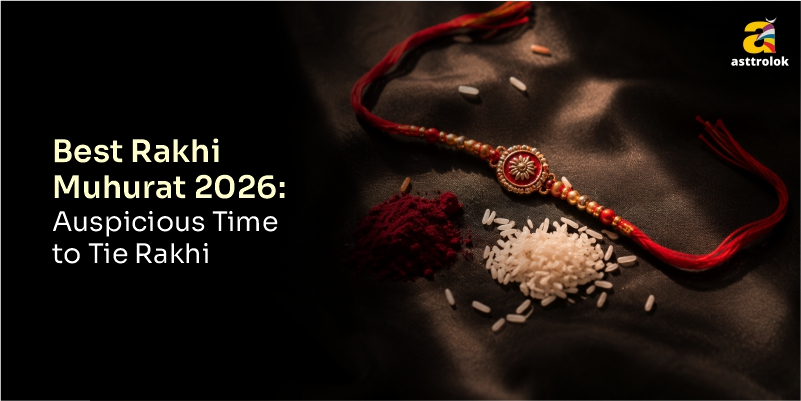
Raksha Bandhan is a festival that looks simple from the outside. A sister ties a Rakhi, the brother offers a gift, sweets are shared and the family spends time together. Yet, for many Indian families, the time at which the Rakhi is tied matters just as much as the ritual itself.
In 2026, Raksha Bandhan will be observed on Friday, 28 August 2026. The Shravana Purnima Tithi begins at approximately 9:08 AM on 27 August and ends at approximately 9:48 AM on 28 August. Panchang calculations also show that Bhadra ends before sunrise on 28 August.
The exact Rakhi tying time 2026 depends on your location because sunrise and local Panchang calculations differ from city to city. For example, the published window is approximately 6:01 AM to 9:48 AM in Bhopal, while Bengaluru has a window of approximately 6:08 AM to 9:48 AM.
Because the timings are location-specific, families should check the Panchang for their city before beginning the ceremony.
Rakhi Muhurat 2026: What Is the Auspicious Time to Tie Rakhi?
The best Rakhi Muhurat 2026 is determined using the Hindu Panchang rather than the Gregorian date alone. Tithi, Bhadra, local sunrise and other Panchang factors are considered when selecting an appropriate time.
For several Indian locations, the published Rakhi tying muhurat 2026 begins shortly after sunrise and continues until the end of Purnima at approximately 9:48 AM. For example, the timing listed for Bhopal is 6:01 AM to 9:48 AM.
This makes the morning particularly important for families who want to complete the ceremony while Purnima is still active.
There is also an important traditional point to understand: Raksha Bandhan rituals are generally advised to be avoided during Bhadra. In 2026, however, the available Panchang calculations indicate that Bhadra has already ended before sunrise on Raksha Bandhan.
Rakhi Tying Time on 28 August 2026
If you are specifically searching for the rakhi muhurat 28 august 2026, remember that there is no single clock time applicable to every city.
The date remains 28 August, but the beginning of the local ceremony window changes with sunrise.
Some examples are:
These timings illustrate why it is better to use a city-specific Panchang rather than copying the time published for another location.
So, if someone searches “what time should we tie Rakhi on 28 August 2026?”, the most accurate answer is: use the local Rakhi Muhurat for your city and complete the ritual within the appropriate Purnima window.
Why Does Bhadra Matter for Rakhi Muhurat?
Bhadra is one of the most searched aspects of Raksha Bandhan because traditional Hindu practices generally recommend avoiding important auspicious activities during this period.
For Raksha Bandhan, many Panchang traditions advise waiting until Bhadra has ended before tying the Rakhi. The reasoning comes from traditional Muhurat practices rather than from modern calendar conventions.
The good news for Raksha Bandhan 2026 is that Bhadra is shown as ending before sunrise on 28 August. Therefore, the published Rakhi ceremony windows begin after Bhadra has ended.
Can We Tie Rakhi During Bhadra?
According to traditional Panchang guidance, it is preferable to avoid tying Rakhi during Bhadra.
This is why checking the Rakhi Muhurat 2026 Bhadra timing is useful before starting the ceremony. In 2026, there is no need to rush into the ritual during Bhadra because the period ends before sunrise on the festival day.
Why Is the Right Rakhi Muhurat Important?
For many families, choosing a Muhurat is a way of beginning an important occasion with a positive and respectful mindset.
The Rakhi ceremony represents affection, protection, responsibility and the continuing bond between siblings. Choosing an auspicious time gives the family an opportunity to perform the ritual calmly rather than rushing through it.
It is also important to remember that Muhurat is not meant to create fear. It is a traditional way of organising an important activity around the Panchang.
The emotion behind the Rakhi remains the heart of the festival.
How to Perform the Rakhi Ceremony
Once the auspicious time to tie Rakhi 2026 has been confirmed, the ceremony can be kept simple.
1. Prepare the Rakhi Thali
A traditional thali may include:
Rakhi
Kumkum or roli
Akshat
Diya
Flowers
Sweets
Incense
Water
A small gift or dakshina
You do not need an elaborate arrangement. Follow your family tradition and keep the atmosphere peaceful.
2. Apply Tilak
The sister applies tilak to her brother's forehead and places akshat over it.
3. Perform Aarti
Aarti is performed as part of the traditional welcome and prayer.
4. Tie the Rakhi
The sister ties the Rakhi around her brother's wrist during the selected Rakhi tying muhurat.
5. Offer Sweets and Gifts
After the Rakhi is tied, sweets are exchanged and the brother traditionally gives a gift or dakshina.
The ceremony can be followed by a family meal or time spent together.
Read: Vehicle Purchase Muhurat August 2026: Auspicious Dates & Timings
Rakhi Puja Vidhi and Traditional Mantra
Families may follow different versions of the Rakhi puja vidhi 2026, depending on their region and family tradition.
A commonly recited mantra while tying a protective thread is:
“Yena baddho Bali Raja Danavendro Mahabalah,
Tena Tvam Anubadhnami Raksha Ma Chala Ma Chala.”
The mantra is traditionally associated with the idea of protection and the sacred bond represented by the thread.
If your family already follows a particular Raksha Bandhan mantra or puja method, it is perfectly reasonable to continue that tradition.
Understanding Rakhi Muhurat Through Astrology
Muhurat is an important part of Jyotish because it connects a particular activity with the Panchang at a given time.
A Muhurat is not simply a random “lucky time”. It is selected after considering traditional calendar elements such as Tithi, Nakshatra, Yoga, Karana and other factors.
For students of astrology, festivals such as Raksha Bandhan provide a practical way to understand how Panchang principles are applied in everyday life. Those who want to study these concepts more systematically can explore Asttrolok's online astrology classes.
Asttrolok, founded by Mr. Alok Khandelwal ji, focuses on making Vedic astrology understandable for learners as well as people seeking practical astrological guidance.
Rakhi Muhurat and Your Individual Kundali
A general festival Muhurat is useful for everyone following the traditional Panchang. However, personal astrology is a different matter.
Your birth date, birth time and birthplace create an individual chart, so personalised astrological guidance may consider factors that a general festival article cannot cover.
If you have questions about career, relationships, business or important life decisions, an online consultation can help you discuss those concerns in relation to your individual circumstances.
Similarly, those who want a deeper understanding of their planetary influences may choose a personalized Kundali rather than relying only on general zodiac predictions.
Bonus Tips for Raksha Bandhan 2026
Do not leave the Rakhi ceremony until the last minute. Check the local timing a day or two before the festival, prepare the thali in advance and keep the Rakhi ready.
Read: Lucky Colours and Lucky Numbers for August 2026
If siblings live in different cities, compare their local timings before deciding when to connect. The person performing the ceremony should ideally follow the Panchang applicable to their location.
Most importantly, avoid treating Muhurat as something stressful. The purpose is to create a peaceful setting for a meaningful family ritual.
राखी बांधने से पहले अपने शहर के अनुसार शुभ मुहूर्त जरूर देखना चाहिए। 28 अगस्त 2026 को भद्रा सूर्योदय से पहले समाप्त हो जाएगी, इसलिए कई स्थानों पर सुबह राखी बांधने का शुभ समय उपलब्ध रहेगा।
रक्षाबंधन का असली महत्व भाई-बहन के प्रेम, विश्वास और एक-दूसरे के प्रति जिम्मेदारी में है। शुभ मुहूर्त इस पवित्र भावना को परंपरा और अनुशासन के साथ मनाने का एक माध्यम है।
Why Choose Asttrolok for Your Astrology Journey?
Astrology becomes more useful when you understand the principles behind it instead of depending only on isolated predictions.
Asttrolok Institute provides astrology education and guidance for people who want to learn Vedic astrology or seek direction regarding their future, career and personal life. Under the guidance of founder Mr. Alok Khandelwal ji, learners can explore astrology through structured education and practical understanding.
For someone beginning an astrology journey, learning the basics of Tithi, Nakshatra, Yoga, Karana and Muhurat can create a much stronger foundation than simply memorising auspicious dates.
Whether your interest is education, career, relationships or a deeper understanding of your Kundali, choosing the right guidance can make the learning process clearer and more meaningful.
Final Thoughts
The best Rakhi Muhurat 2026 falls on the morning of Friday, 28 August, with the exact local timing depending on your city. Purnima ends at approximately 9:48 AM, and Bhadra is shown as ending before sunrise, making the morning window particularly relevant for the Rakhi ceremony.
Rather than simply asking, “What time should I tie Rakhi?”, it is worth understanding why that time is considered appropriate. The Hindu Panchang brings together Tithi, local sunrise and other calendar factors to guide traditional observances.
Raksha Bandhan is ultimately about relationships. A carefully chosen Muhurat adds a traditional spiritual dimension, but the love between siblings is what makes the occasion truly special.
With the guidance of Mr. Alok Khandelwal ji, Asttrolok continues to help learners and astrology seekers explore Vedic astrology in a practical and understandable way. If you want to build a stronger understanding of astrology or seek thoughtful guidance for your future and career, Asttrolok can be a meaningful place to begin.
Frequently Asked Questions
1. What is the best Rakhi Muhurat 2026?
Raksha Bandhan falls on Friday, 28 August 2026. The available Rakhi ceremony window depends on location because its starting point is linked with local sunrise. In Bhopal, for example, the published window is approximately 6:01 AM to 9:48 AM. Bhadra is shown to have ended before sunrise, so the morning ceremony does not overlap Bhadra.
2. What is the best time to tie Rakhi in 2026?
The best time should be selected according to the Panchang for your location. On 28 August 2026, the published ceremony windows in several Indian cities fall in the morning and continue until approximately 9:48 AM, when Purnima ends. Since sunrise differs from city to city, the exact starting time should be checked locally.
3. Can Rakhi be tied during Bhadra in 2026?
Traditional Panchang guidance recommends avoiding Rakhi rituals during Bhadra. Fortunately, for Raksha Bandhan 2026, Bhadra is calculated to have ended before sunrise on 28 August. This means the commonly published morning Rakhi windows begin after Bhadra has ended. Always check the Panchang for your specific location before performing the ceremony.
4. What is the Rakhi Muhurat on 28 August 2026?
The Rakhi Muhurat varies by city. For example, Bhopal has a published window of approximately 6:01 AM to 9:48 AM, while Bengaluru has approximately 6:08 AM to 9:48 AM. The common end time comes from the Purnima Tithi ending at approximately 9:48 AM. Local sunrise determines the beginning of the ceremony window.
5. What should be included in a Rakhi thali?
A traditional Rakhi thali may include Rakhi, roli or kumkum, akshat, diya, flowers, sweets and incense. Some families also keep water, sandalwood paste or a small gift. There is no fixed requirement to make the thali elaborate. Following your family tradition and performing the ceremony peacefully is more important than adding unnecessary items.
6. Why should Rakhi not be tied during Bhadra?
In traditional Hindu Muhurat practices, Bhadra is generally avoided for certain auspicious activities, including Rakhi ceremonies. The custom is connected with Panchang-based timing traditions. This is why families often check Bhadra before deciding the Rakhi tying time. In 2026, Bhadra ends before sunrise on Raksha Bandhan, so this restriction does not overlap the main morning ceremony window.
Comments (0)
.webp)
Categories
Recent posts

भाग्यांक कैसे ...
30 Aug 2023
Importance of Bhakoot Koota in Kundali ...
30 Aug 2023